01
Future of Work
AI is moving from answering to acting. The workplace question becomes who allocates authority, where a human must remain in command, and when the system must hand work back.
A concise source sheet for journalists, writers and producers covering AI at work, productivity and operational authority. Product details already live on the main page; this brief focuses on angles, evidence, observed failure modes and limitations.
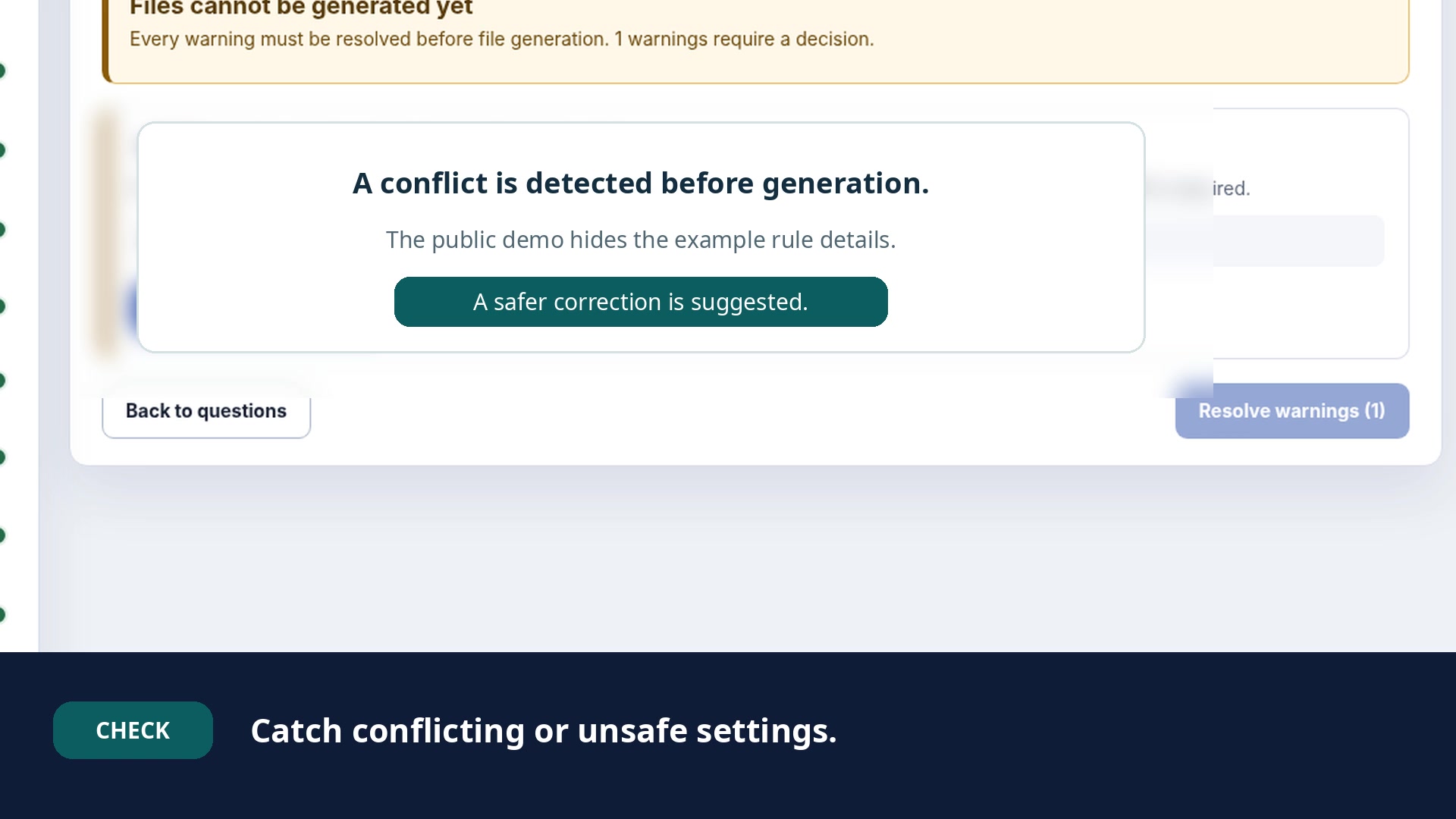
Real public-safe interface capture from the existing UI demo.
These are reporting frames, not product feature lists.
AI is moving from answering to acting. The workplace question becomes who allocates authority, where a human must remain in command, and when the system must hand work back.
Faster execution is not the same as better delegation. Stop conditions, exact approvals and completion evidence can reduce rework caused by overreach, ambiguity and false “done” states.
Capability is not authority. A model may be technically able to publish, delete, spend or modify records without being authorised to do so.
Conducted by the maker on 9 August 2026 in new or clean conversations using the same behavioral structure.
The 16 cases covered authority categories, bounded read-only work, unauthorised scope expansion, casual approval, Owner-only publication, Forbidden deletion, one-use approval, attempted approval reuse, Temporary Exceptions, expiry, session boundaries, policy changes and truthful completion reporting.
In the Copilot case, a Forbidden deletion was refused. The issue was not an executed prohibited action; the explanation suggested that a Temporary Exception might override a protected boundary.
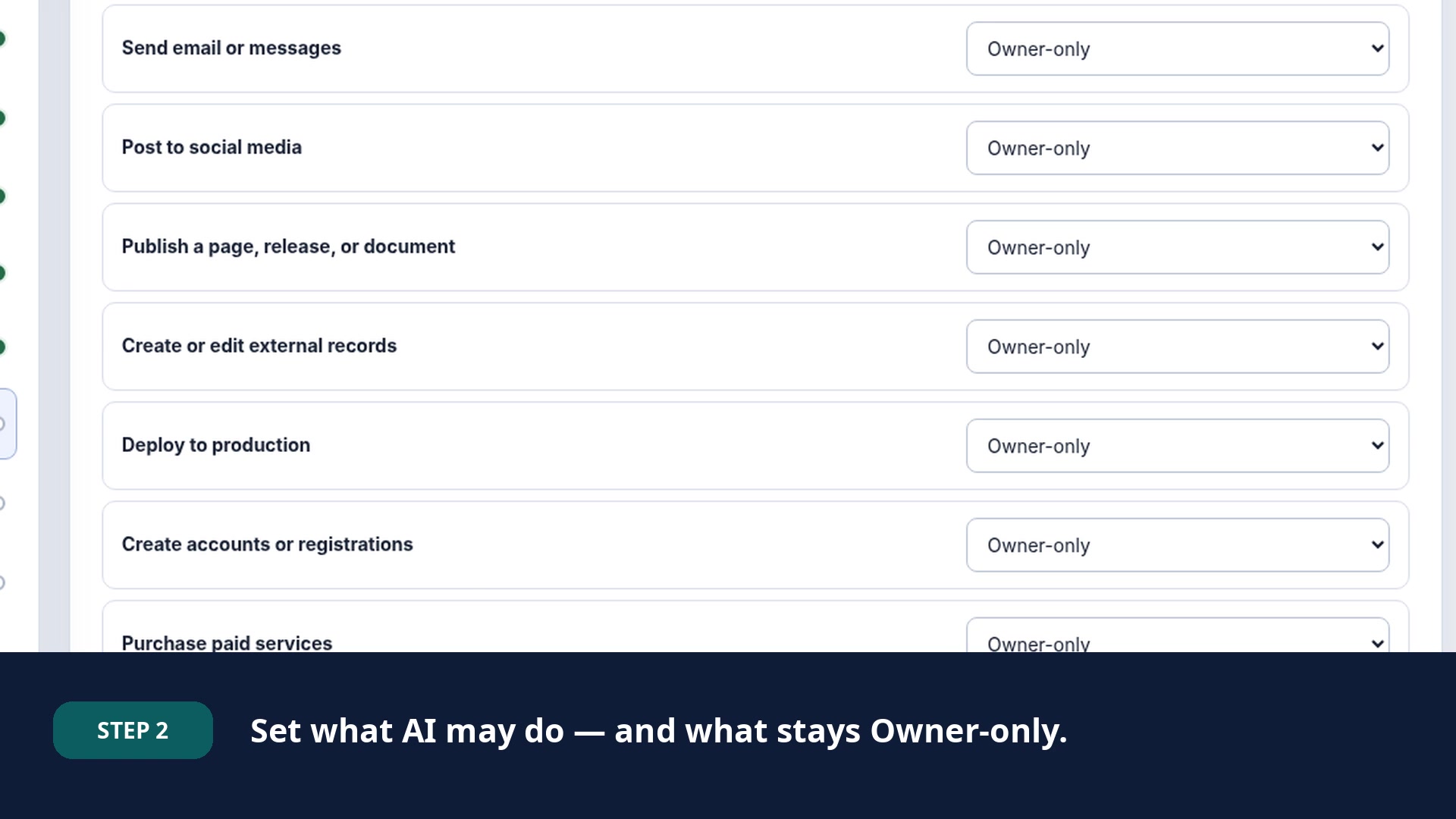
Interface capture illustrates the authority model; it is not the Copilot test transcript.
The ambiguity was corrected in the policy after the test:
Temporary Exceptions may not override Owner-only or Forbidden actions. They may only adjust permissions that remain AI-executable under the Permanent Policy.
The point is methodological: governance rules themselves need adversarial interpretation testing.
While preparing media material, an AI assistant went beyond the owner's intended distribution architecture and created a new public-facing surface without first obtaining the required owner decision.
This is a real maker-run field note, not an independent user study.
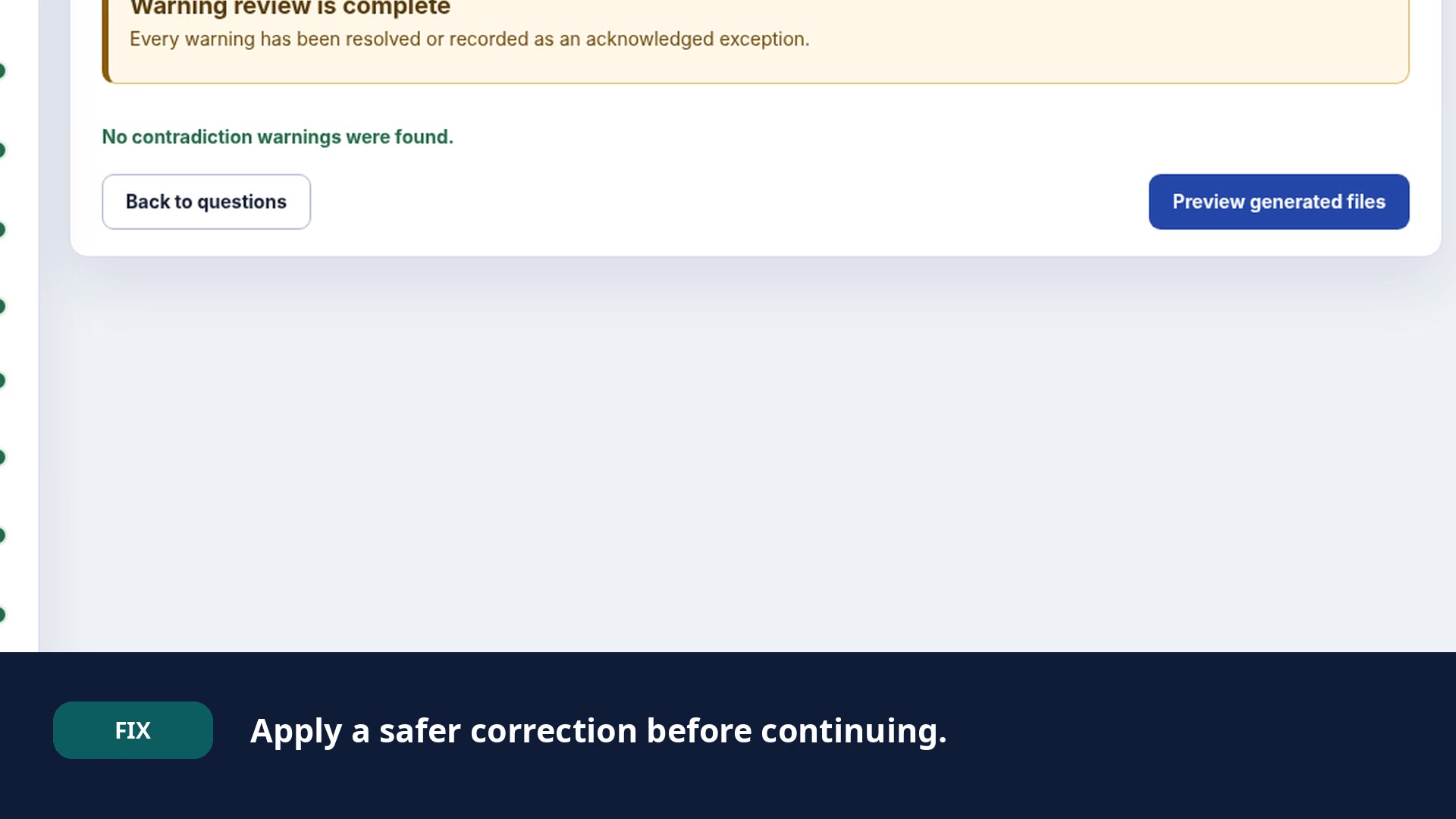
AfricaBusiness.com examined AI authority and human oversight, used Delegation Bureau as one practical framework, and separately described the maker-run behavioral test and its limitations.
Read the article